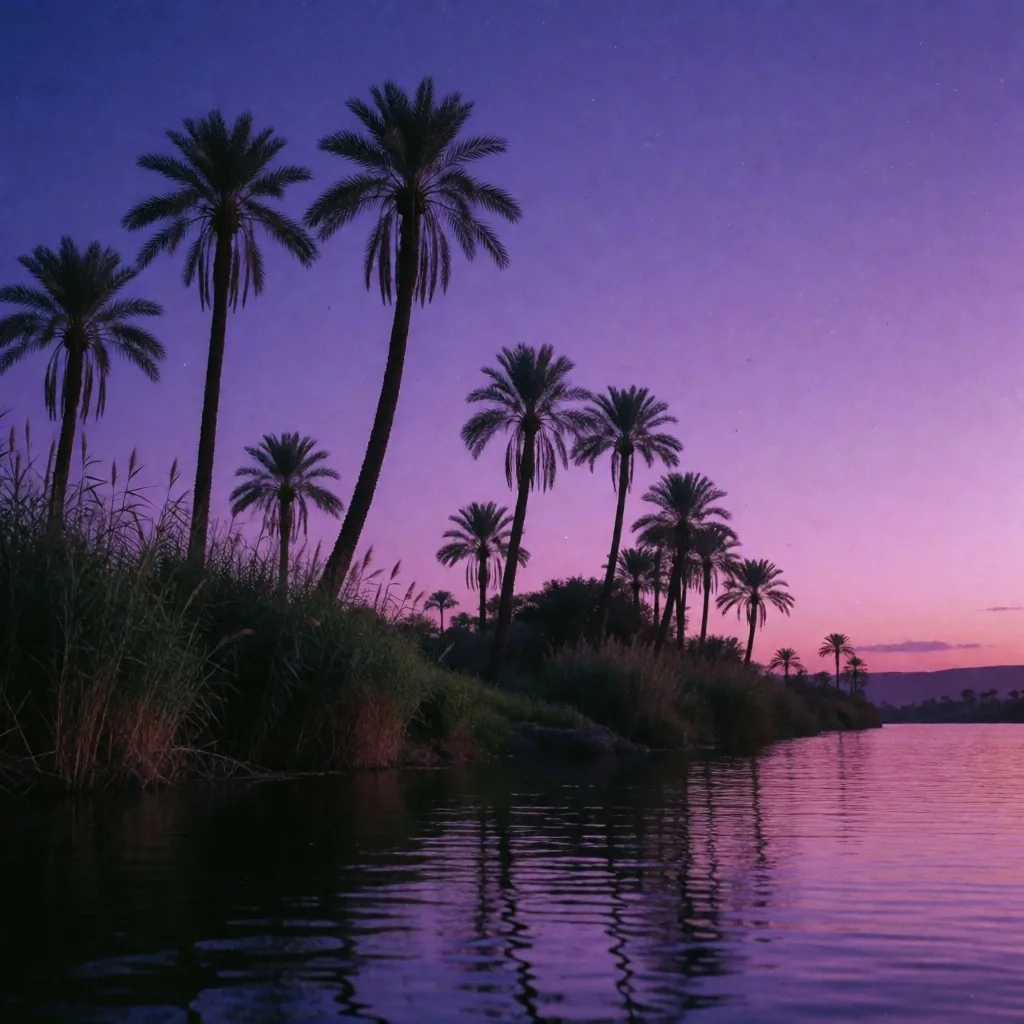
Nature and Greenery Along the Nile Valley
The Nile is the fundamental artery that sustains life throughout Egypt. For the traveller into Egypt, the river valley offers a lush, green contrast to the surrounding desert — a narrow strip of reeds, palms, and silt that has shaped every settlement along its banks.
A slow, observant approach to one of the world's most iconic waterways — focusing on the environmental fabric of the banks, islands, and traditional river life.
Practical guidance for independent voyagers exploring the river valley.
River Guide Access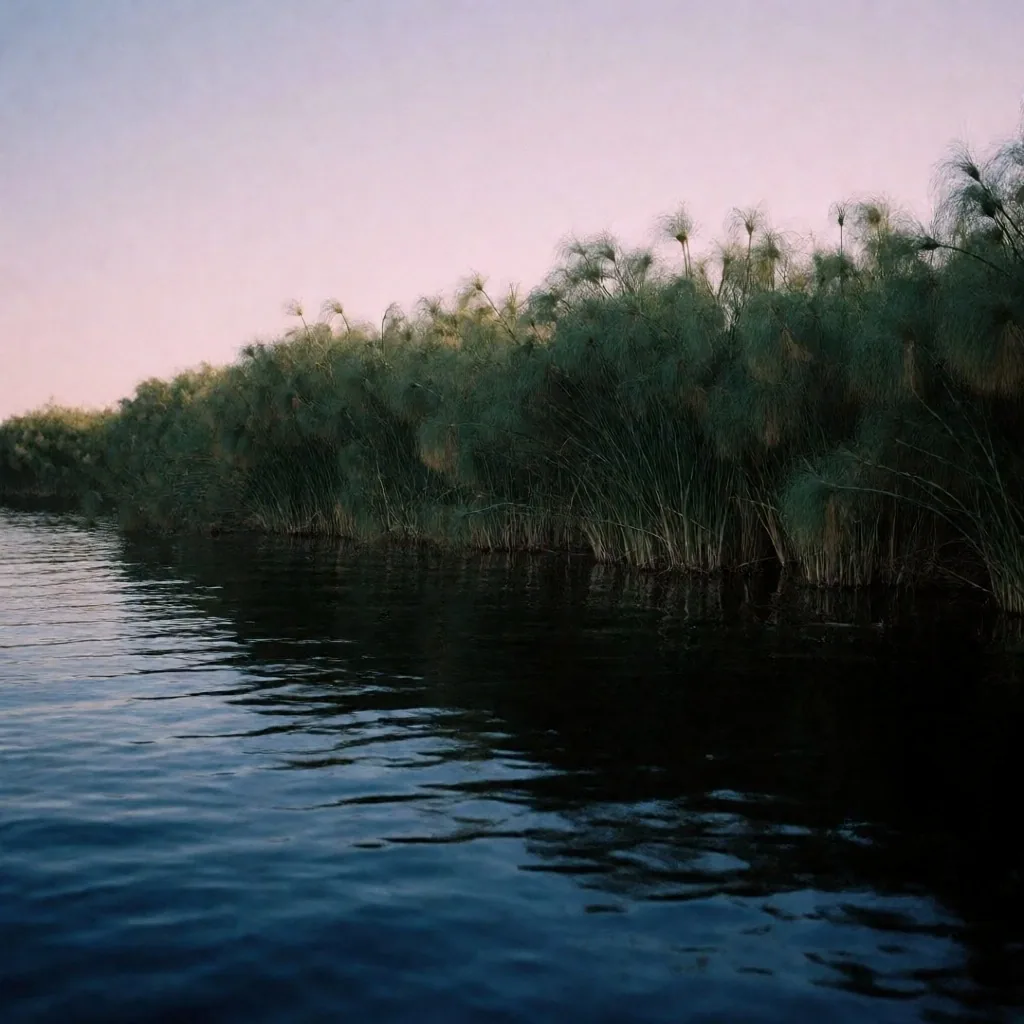
The Riparian Ecosystem
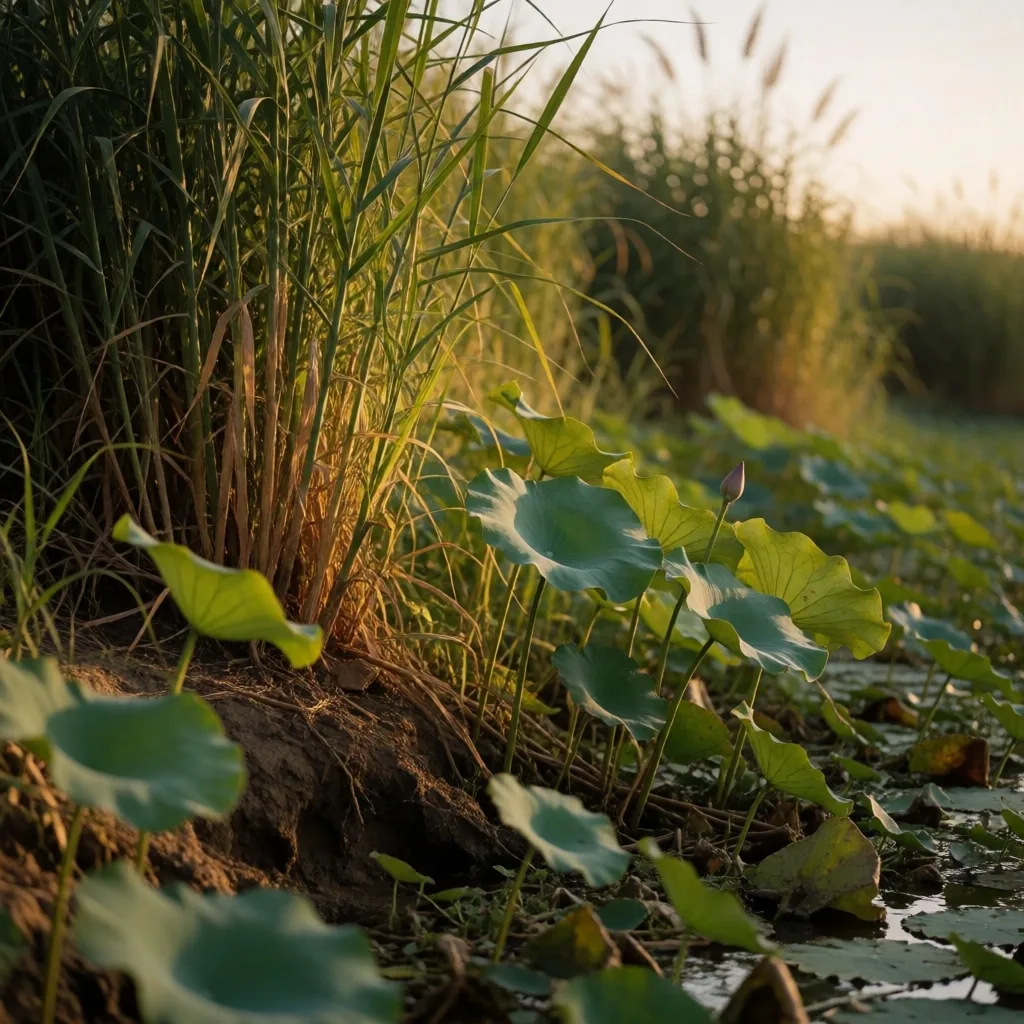
The land immediately adjacent to the Nile is incredibly fertile due to thousands of years of silt deposition. This narrow strip of green is home to a dense variety of plants, including reeds, papyrus, and lotus.
These plants provide habitat for numerous insects and small animals that form the base of the valley's food chain. Walking along the riverbanks allows you to see the intricate balance of this water-dependent environment.
The silt layer can run several meters deep in places — deposited layer by layer with each historical flood season. Even with modern controls on the river's flow, the soil here remains some of the richest agricultural earth in North Africa, supporting a band of green rarely more than a few kilometers wide before the desert resumes.
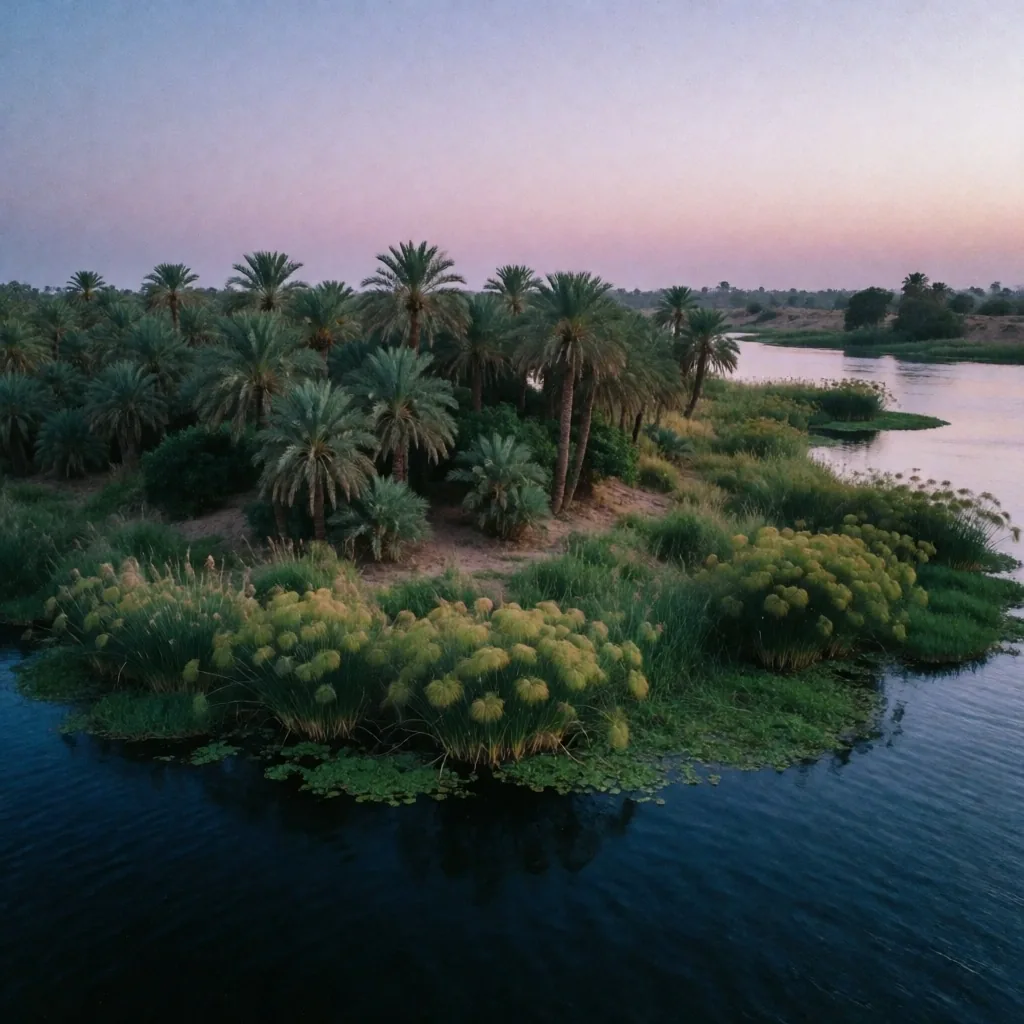
Island Sanctuaries
The Nile is dotted with numerous islands, some of which remain largely untouched by modern development. These islands often serve as botanical gardens or nature reserves, hosting rare tree species and providing nesting grounds for birds.
Exploring these islands by small boat offers a peaceful escape from the busy mainland. The air on the islands is often cooler, filtered by the surrounding water and dense foliage.
Some islands are no wider than a few dozen meters — just a sandbar that caught seeds and grew into a thicket. Others support small communities that have farmed the same soil for generations, reaching the mainland only by rowboat.
Traditional Felucca Travel
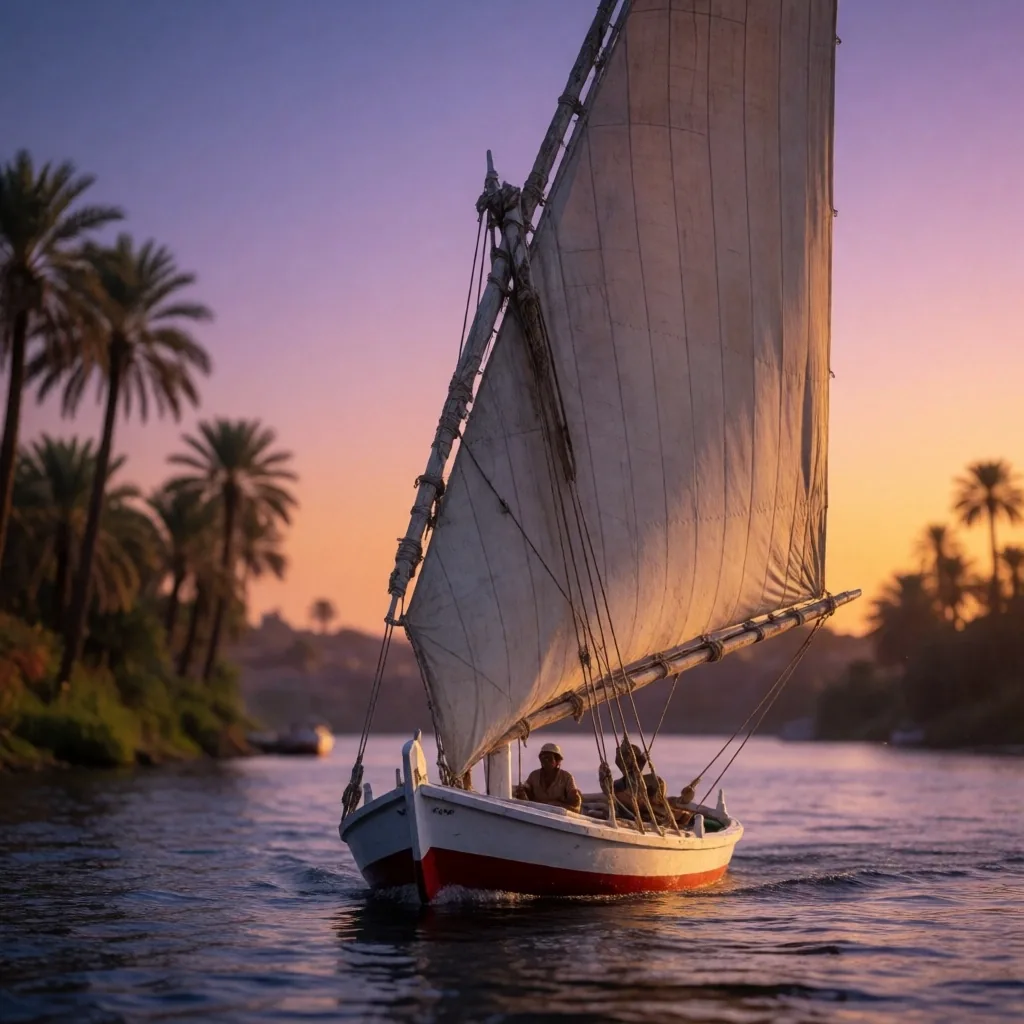
The best way to experience the river's natural rhythm is aboard a felucca, a traditional wooden sailing boat. Without the noise of a motor, you can hear the lap of the water and the calls of the birds. This method of travel is entirely dependent on the wind and the current, forcing a slower, more mindful pace — a sustainable way to explore the river while supporting local boatmen.
Pace and Wind
A felucca moves at the speed of the breeze. You may drift nearly motionless for an hour, then catch a current that carries you past several bends. There is no schedule — only the river's rhythm and the captain's reading of the water.
Sound and Silence
Without an engine, the soundscape changes completely. Water laps against the hull, reeds rustle as the boat passes close to the bank, and bird calls carry across the open water. The silence between those sounds is part of the experience.
Local Boatmen
Most felucca captains learned the river from their fathers. They know which channels run shallow in late summer, where the evening wind tends to shift, and which bank offers the best anchor for the night. Hiring them directly supports river communities.
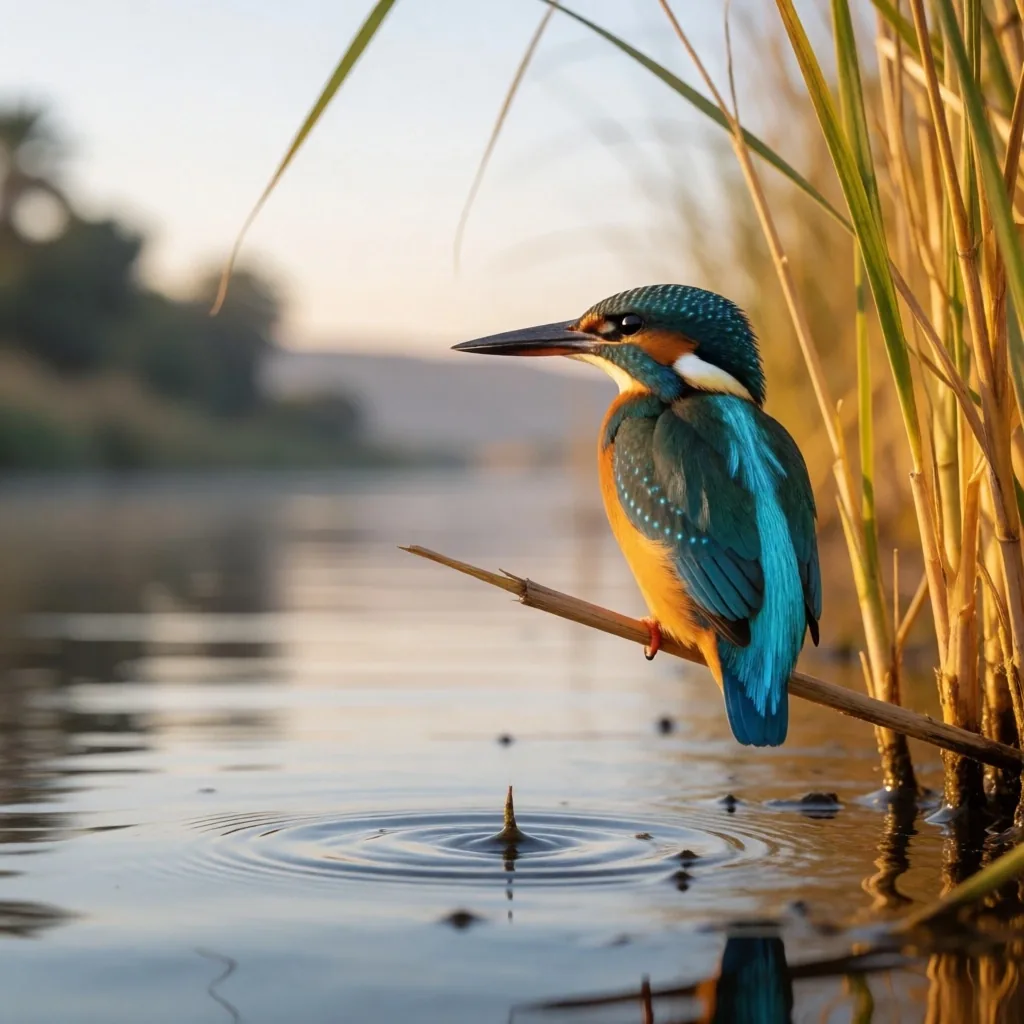
Birdlife of the River
The Nile valley is a major corridor for migratory birds, making it a paradise for birdwatchers. You can see kingfishers diving for fish, herons standing motionless in the shallows, and vast flocks of geese during the winter months.
The reeds along the banks are particularly active during the early morning and late afternoon. Bringing a field guide to local birds will greatly enhance your river experience.
Winter months bring the largest variety. Flocks of geese and stork descend on the shallow fields beside the river, feeding in the flooded agricultural plots before continuing south. Even a casual observer will notice the difference between a December morning on the banks and one in July.
Agricultural Traditions
The rhythm of life along the Nile is dictated by the seasons of the river. Farmers still use many traditional methods to irrigate their crops and harvest their produce. You will see water wheels and small canals directing the flow to fields of clover, wheat, and vegetables.
This agricultural landscape is a testament to the enduring relationship between the Egyptian people and their river. The water wheel — a wooden structure turned by the current itself — lifts water from the main channel into irrigation ditches that feed smaller plots. Some of these wheels have been repaired and rebuilt for decades, the same mechanism operating on the same spot.
Clover, locally grown as animal fodder, fills the fields closest to the water in the cooler months. Wheat follows in rotation. Vegetable plots — tomatoes, onions, leafy greens — sit on the slightly higher ground, fed by the same hand-dug channels. The arrangement looks informal from a distance, but follows a logic passed through families.
Walking the embankment paths between fields gives you a close view of how the valley feeds itself. Farmers work early and late, resting through the hottest hours. If you pass through a village at midday, the quiet is not abandonment — it is the river valley's oldest habit.
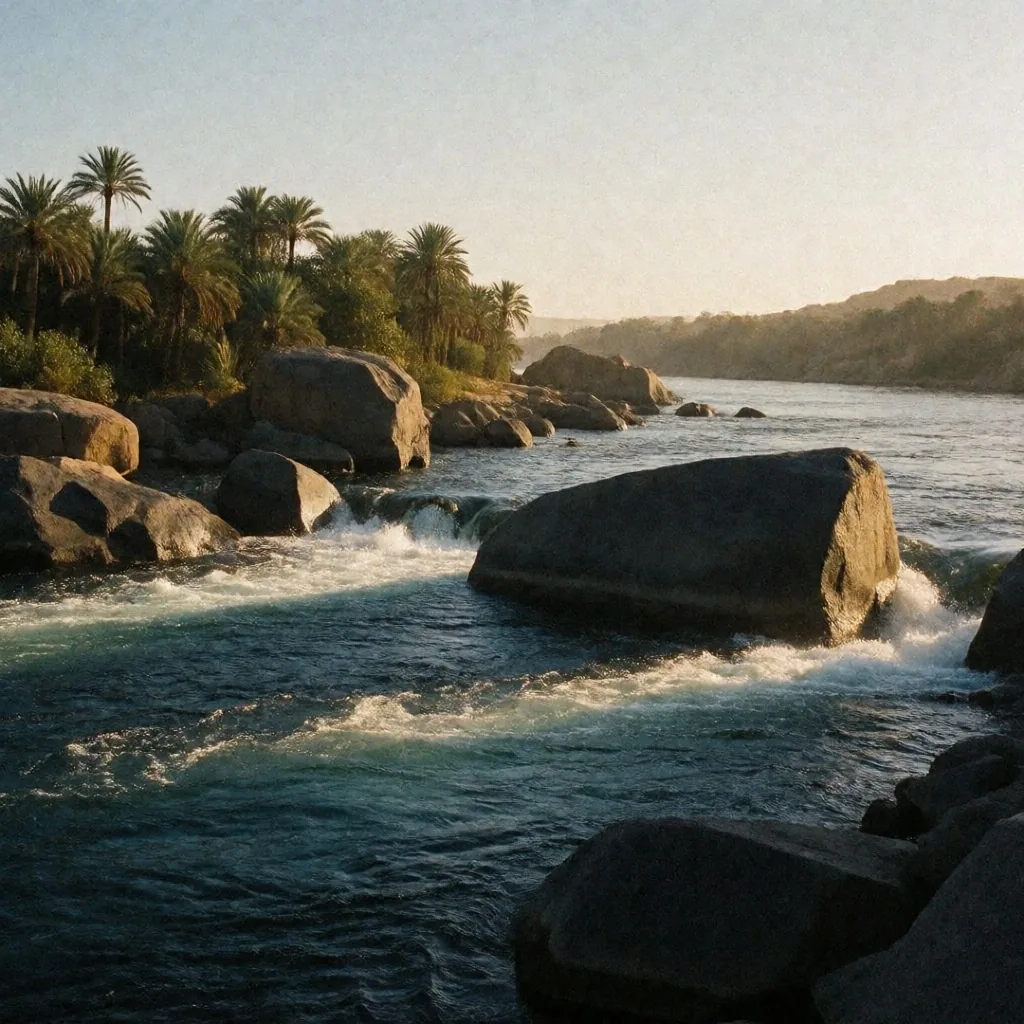
The Cataracts of the South
In the southern part of the country, the river passes through areas of hard granite, creating a series of rapids known as cataracts. The landscape here is more rugged and dramatic, with large boulders breaking the flow of the water.
This region offers some of the most beautiful scenery along the Nile, with the dark rock contrasting against the blue water and green palms. It is a prime area for exploring the geological history of the river — the granite here predates the river itself by millions of years.
The cataracts were once navigational barriers. Boats had to be unloaded and portaged, or routed through narrow channels known only to local pilots. Today, the same channels make for some of the most visually striking river travel in the country.
River Safety and Ethics
The Nile is a powerful natural force, and its waters should be treated with respect. We provide advice on safe swimming areas and the importance of not polluting the river with waste or chemicals.
Maintaining the cleanliness of the water is vital for the millions of people and animals that depend on it. Visitors are encouraged to use biodegradable products and carry out all trash.
- — Ask locally before swimming. Currents can be deceptively strong, even in calm-looking stretches.
- — Carry out everything you carry in. Riverbanks have no municipal collection.
- — Use biodegradable soap and shampoo, and wash at least twenty meters from the water's edge.
- — Keep distance from nesting birds along the reeds, especially during winter months.
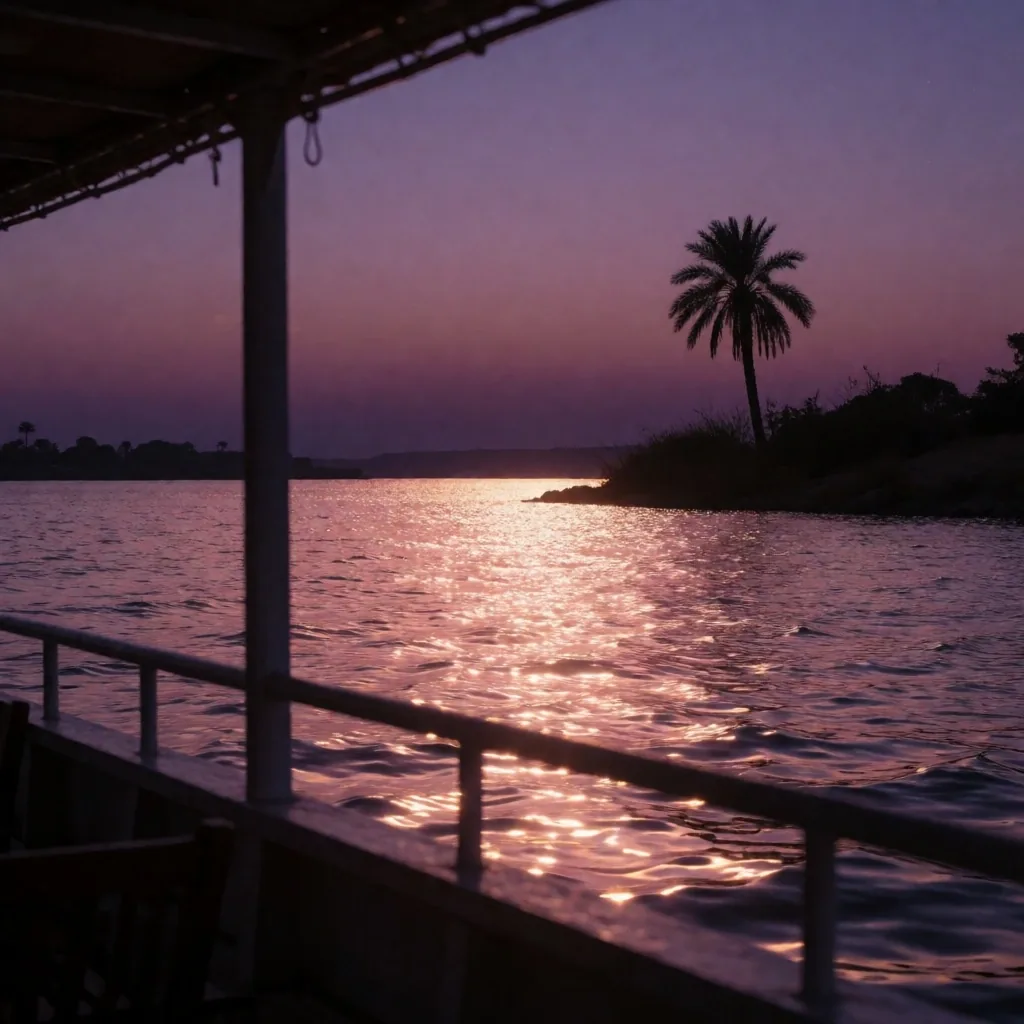
Sunset on the Water
A sunset over the Nile is one of the most serene experiences a traveler can have. The sky turns shades of orange, pink, and purple, reflected perfectly in the slow-moving water.
This daily spectacle is best viewed from the deck of a boat or a quiet spot on the riverbank. It is a time when the heat of the day dissipates and the valley becomes quiet and calm.
The color shift happens quickly — fifteen minutes from first gold to deep indigo. The birds know it too. Flocks reposition to their roosts in the reeds, and the river's surface goes glassy as the wind drops with the sun.
The Delta Wetlands
As the Nile approaches the sea, it fans out into a broad delta filled with marshes and lagoons. This area is a different kind of green, characterized by wet soils and vast expanses of rice and cotton fields.
The delta is a vital ecological zone that supports a high density of wildlife and provides a different perspective on the river's end. Exploring the small distributary channels reveals a world of hidden waterways.
Where the valley proper narrows to a strip, the delta opens wide. The horizon flattens. Roads follow the natural levees between lakes, and the water is everywhere — in the fields, in the drainage ditches, in the lagoons that sit between the last villages and the sea. It is the river's last act before salt water.
Explore the Delta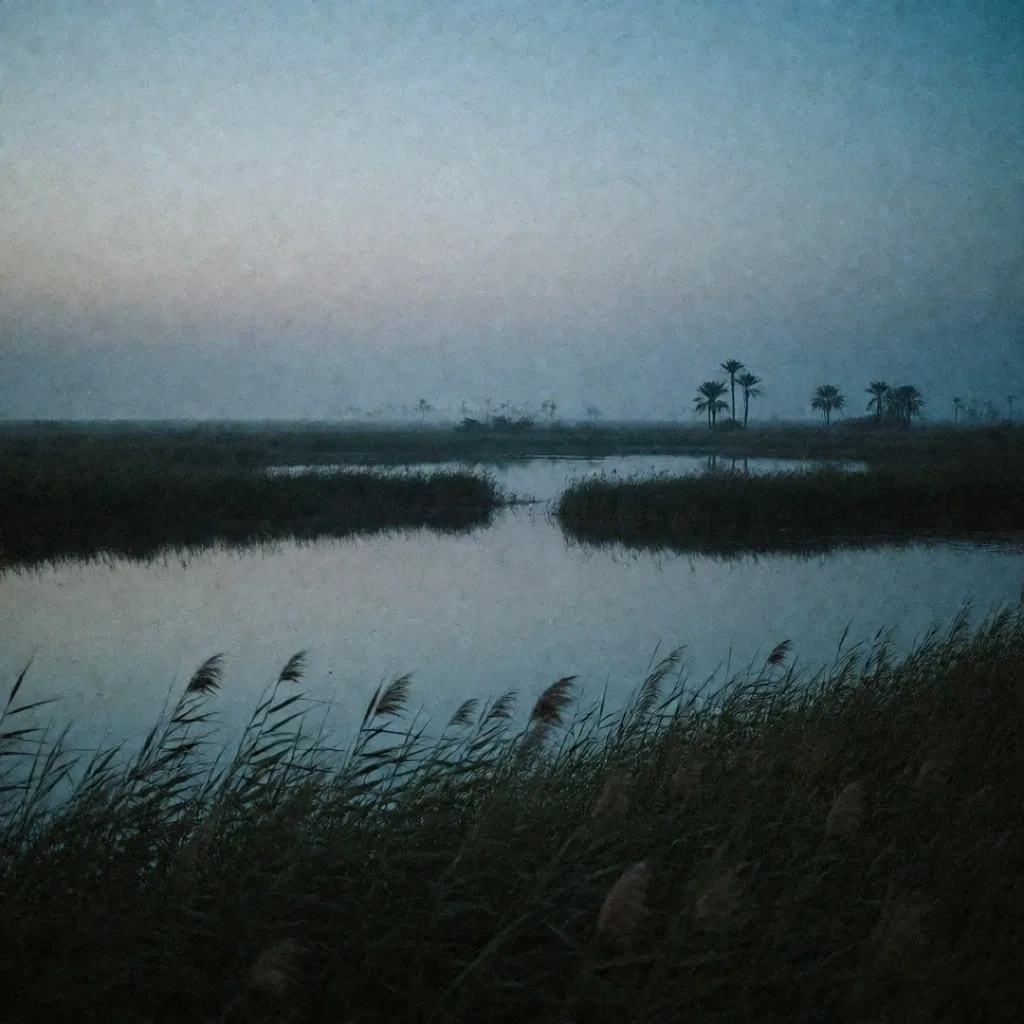
We advocate for travel choices that minimize the environmental footprint on the Nile. This includes choosing smaller, wind-powered vessels and staying in locally-owned guesthouses along the banks.
By focusing on low-impact activities, you help preserve the river's health for future generations. Understanding the challenges facing the river — such as water scarcity and pollution — makes for a more informed and responsible traveller.
The practical version is simple. Travel on boats that use wind, not fuel. Stay in guesthouses that are owned by the families who run them. Spend money in the villages along the bank rather than at large operators. Walk the embankments instead of chartering speedboats. These choices add up — they keep the river economy local and the water cleaner.
The Nile has carried travelers for thousands of years. The ones who left the lightest trace are the ones the river remembers longest.
Continue the Journey
These egypt travelling guides cover the full range of natural environments across the country. Pick the next landscape that interests you.
Plan Your River Trip
Practical preparation matters on the river. Read up on what to bring, how to move between towns, and what local customs to expect along the banks.